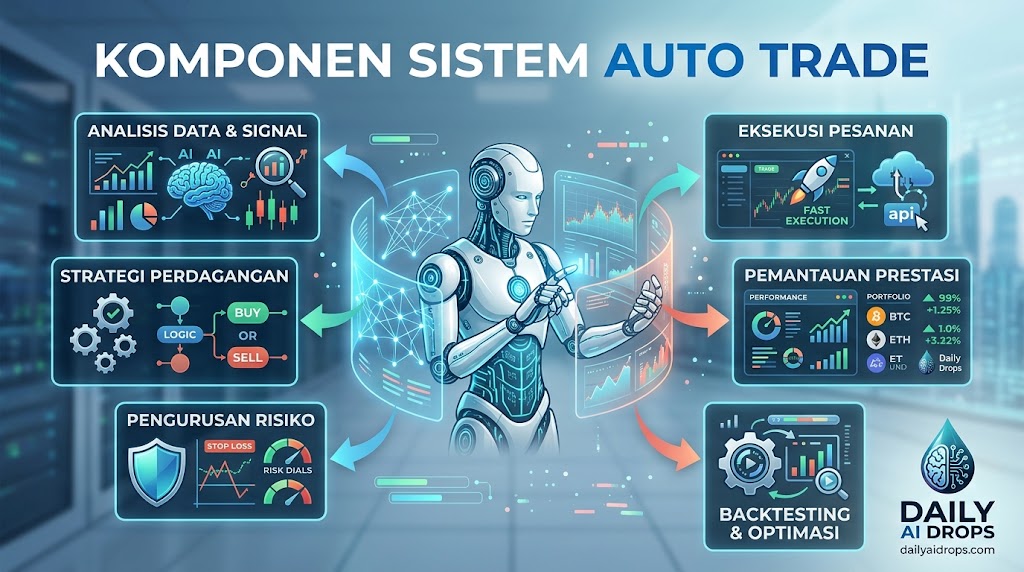
Komponen Sistem Auto Trade — Components of an Auto-Trade System
Komponen Sistem Auto Trade: Panduan Mudah Seperti Rancangan Sarapan Pagi
Bayangkan awak nak buat sarapan nasi lemak setiap pagi. Tapi awak tak nak bangun awal-awal, jadi awak rancang semua benda awal-awal lagi. Begitulah juga dengan sistem auto trade—ia ibarat pembantu peribadi yang tolong awak uruskan pelaburan tanpa perlu pantau pasaran 24/7. Tapi, apa saja komponen penting dalam sistem ni?
1. Signal (Arahan Beli/Jual)
Signal ibarat resepi nasi lemak awak. Kalau resepi tu bagus, nasi lemak pun sedap. Dalam auto trade, signal datang dari analisis teknikal atau berita pasaran. Contohnya, “Beli saham XYZ kalau harganya naik 5% dalam sejam.“ Signal ni yang tentukan bila nak masuk atau keluar pasaran.
2. Execution (Laksanakan Arahan)
Ini macam awak suruh pembantu awak goreng ikan bilis ikut resepi. Execution ialah proses sistem auto trade yang terus beli atau jual ikut signal yang dah ditetapkan. Cepat dan tepat—takde lagging atau terlupa nak buat!
3. Risk Management (Kawal Risiko)
Bayangkan awak letak periuk nasi dekat dapur, tapi tak pasang penggera kebakaran. Risk management ialah penggera tu. Ia tetapkan berapa banyak duit yang boleh hilang dalam satu trade, contohnya “Jangan labur lebih 2% dari modal dalam satu dagangan.“ Jadi, kalau rugi pun, awak takkan kehilangan semua duit.
4. Backtesting (Uji Sebelum Guna)
Sebelum jual nasi lemak kat pasar, awak pasti cuba dulu resepi tu kat rumah, kan? Backtesting tu macam ujian resepi—sistem akan diuji guna data pasaran lama untuk tengok sama ada strategy awak berkesan atau tidak. Kalau dah bagus, barulah guna dalam pasaran sebenar.
Dengan empat komponen ni, sistem auto trade awak akan lebih teratur dan kurang risiko. Jadi, tak perlu risau—sistem ni akan tolong awak uruskan pelaburan macam chef profesional menguruskan dapur!
Components of an Auto-Trade System: Like Planning Your Morning Routine
Imagine you want to prepare nasi lemak every morning, but you don’t want to wake up too early. So, you plan everything in advance. An auto-trade system works the same way—it’s like a personal assistant managing your investments without needing you to monitor the market 24/7. But what are the key components of this system?
1. Signal (Buy/Sell Instructions)
A signal is like your nasi lemak recipe. If the recipe is good, the dish turns out delicious. In auto-trading, signals come from technical analysis or market news. For example, “Buy XYZ stock if its price rises by 5% in an hour.“ These signals determine when to enter or exit the market.
2. Execution (Carrying Out Orders)
This is like instructing your helper to fry the ikan bilis according to the recipe. Execution is the process where the auto-trade system buys or sells based on the predefined signals. It’s fast and precise—no delays or forgotten steps!
3. Risk Management (Controlling Risks)
Imagine placing a rice pot on the stove without a fire alarm. Risk management is that alarm. It sets limits on how much money you can lose in a single trade, like “Don’t invest more than 2% of your capital in one trade.“ So, even if you lose, you won’t lose everything.
4. Backtesting (Testing Before Use)
Before selling nasi lemak at the market, you’d test the recipe at home first, right? Backtesting is like that—it tests your system using historical market data to see if your strategy works. Only when it’s proven effective do you use it in the real market.
With these four components, your auto-trade system will be more organized and less risky. No need to worry—the system will handle your investments like a professional chef managing a kitchen!